
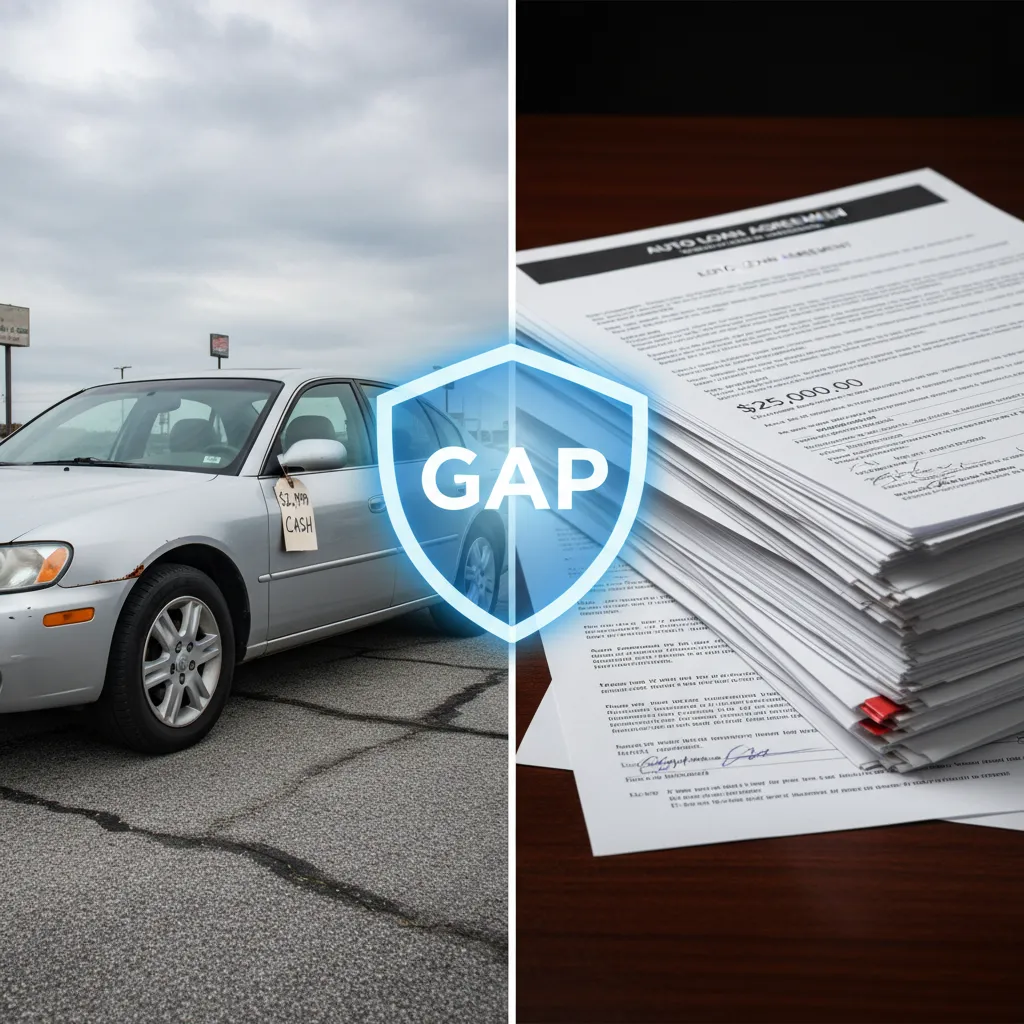
As a Senior Insurance Consultant with over two decades of experience, I have seen the landscape shift. Gap insurance was once considered a “new car only” product. That advice is now outdated. With used car depreciation rates stabilizing at -18% year-over-year and loan terms stretching to 84 months, the math has changed.
In this non-biased breakdown, we will analyze whether Gap insurance is a necessary shield or an upsell scam for your used vehicle.
The 2025 Used Car Debt Reality
Before we dive into the “worth it” verdict, we must look at the hard data. The financial exposure for used car buyers has increased significantly due to market corrections following the pandemic pricing bubble.
| Metric | 2024/2025 Statistic | Impact on You |
|---|---|---|
| Negative Equity Rate | 39% of financed drivers are “underwater” (Q4 2024) | Nearly 4 in 10 drivers owe more than their car is worth. |
| Depreciation Rate | ~18% annually for used cars | Your car loses value faster than you pay down the principal. |
| EV Exposure | 54% of EV owners are underwater | Electric vehicles carry significantly higher financial risk. |
| Gap Cost (Insurer) | $20 – $100 per year | Extremely low cost relative to the risk. |
What is Gap Insurance? (The “Bridge” Analogy)
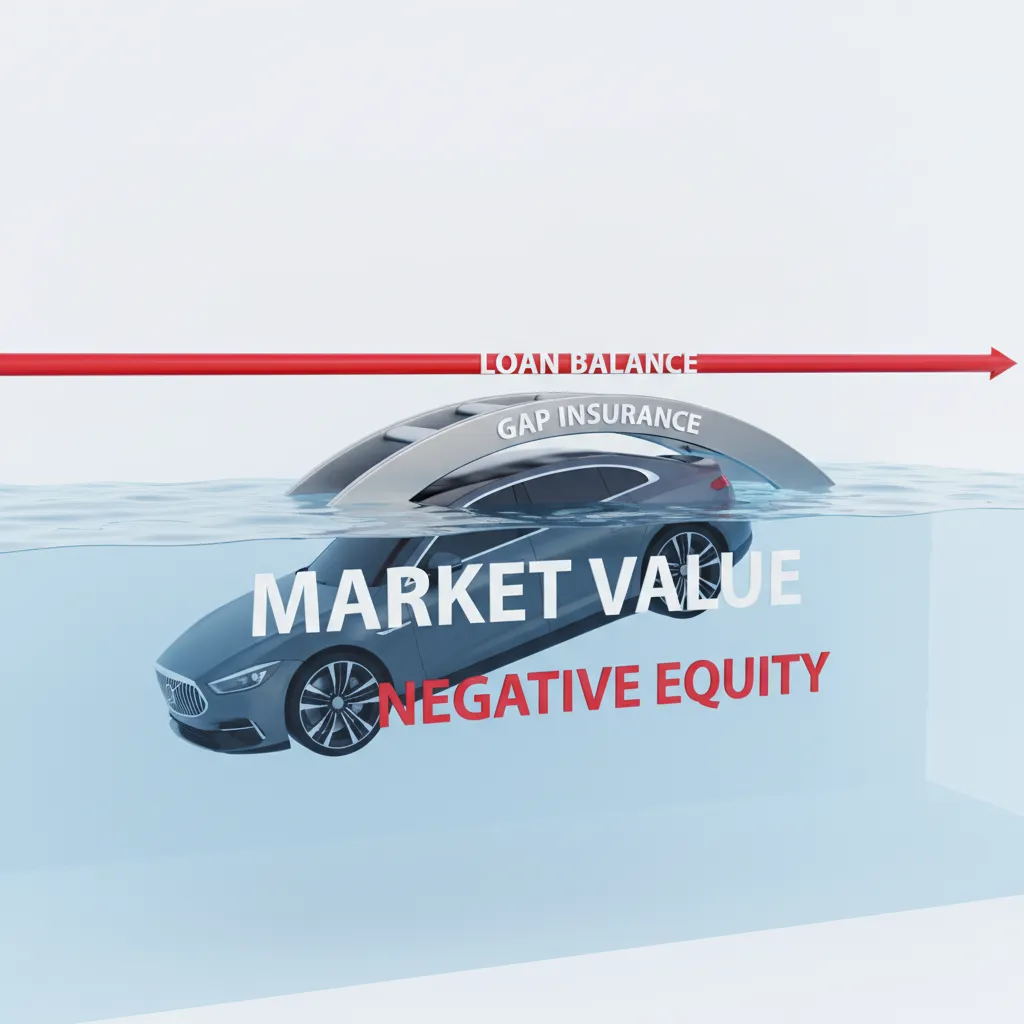
Guaranteed Asset Protection (GAP) is not a replacement for your standard auto policy; it is a supplement. Standard comprehensive and collision insurance covers the Actual Cash Value (ACV) of the vehicle at the time of loss. It does not care about your loan balance.
Gap insurance bridges the difference between the ACV payout and the amount you owe to the lender. It is a pure protection product designed to prevent a financial catastrophe.
The Financial Case: When Math Dictates “Yes”
Is it worth it? The answer isn’t emotional; it’s mathematical. If you paid cash for your used car, stop reading—you don’t need Gap. If you financed, you need to calculate your Loan-to-Value (LTV) ratio.
You MUST consider Gap insurance for a used car if any of the following apply:
- Low Down Payment: You put down less than 20%. This immediately places you in a negative equity position the moment you sign the papers.
- Long Loan Terms: Your loan term is 60 months (5 years) or longer. Your payments are mostly interest in the early years, meaning the principal balance drops slower than the car’s depreciation.
- Rolled-Over Negative Equity: You traded in a previous car that you still owed money on, and the dealer added that debt to your new loan. This is a “debt snowball” that makes Gap insurance mandatory for financial safety.
- High Depreciation Models: You bought a luxury sedan or an Electric Vehicle (EV). As noted in the data, 54% of EV owners are underwater due to rapid price fluctuations in the EV market.
Strategic Comparisons: Understanding Insurance Nuances
To truly understand the value of Gap insurance, it helps to look at how we treat risk in other areas of our financial lives. Insurance is rarely “one size fits all,” and the principles of selecting the right coverage apply globally.
Pure Protection: The Term Insurance Analogy
Think of Gap insurance like Term Insurance vs Life Insurance (Whole Life). Whole life insurance has a cash value component, whereas term insurance is “pure protection”—you pay a small premium to cover a catastrophic risk for a specific period. Gap insurance is the “term insurance” of the auto world. It has no cash value and expires when the loan is paid off, but for that specific window of high risk, it offers high coverage for a low cost.
Similarly, when looking for the Best Term Insurance Plan in India or the US, smart consumers look for high claim settlement ratios and low premiums. You should apply this same logic to Gap insurance: look for a provider (usually your auto carrier) that offers seamless claims integration at a low annual fee.
Risk Pooling: The Health Insurance Analogy
Consider the decision between a Family Floater vs Individual Health Insurance plan. A family floater pools the risk of multiple members into one sum insured, often being more cost-effective for a young family. Individual plans offer specific, dedicated limits. Gap insurance is like that specific, individual limit—it addresses a unique, high-risk “gap” in your financial health that a general “floater” (your standard auto policy) simply doesn’t cover. It customizes your protection to your specific debt profile.
How to Buy: Dealership vs. Carrier (The Cost Breakdown)
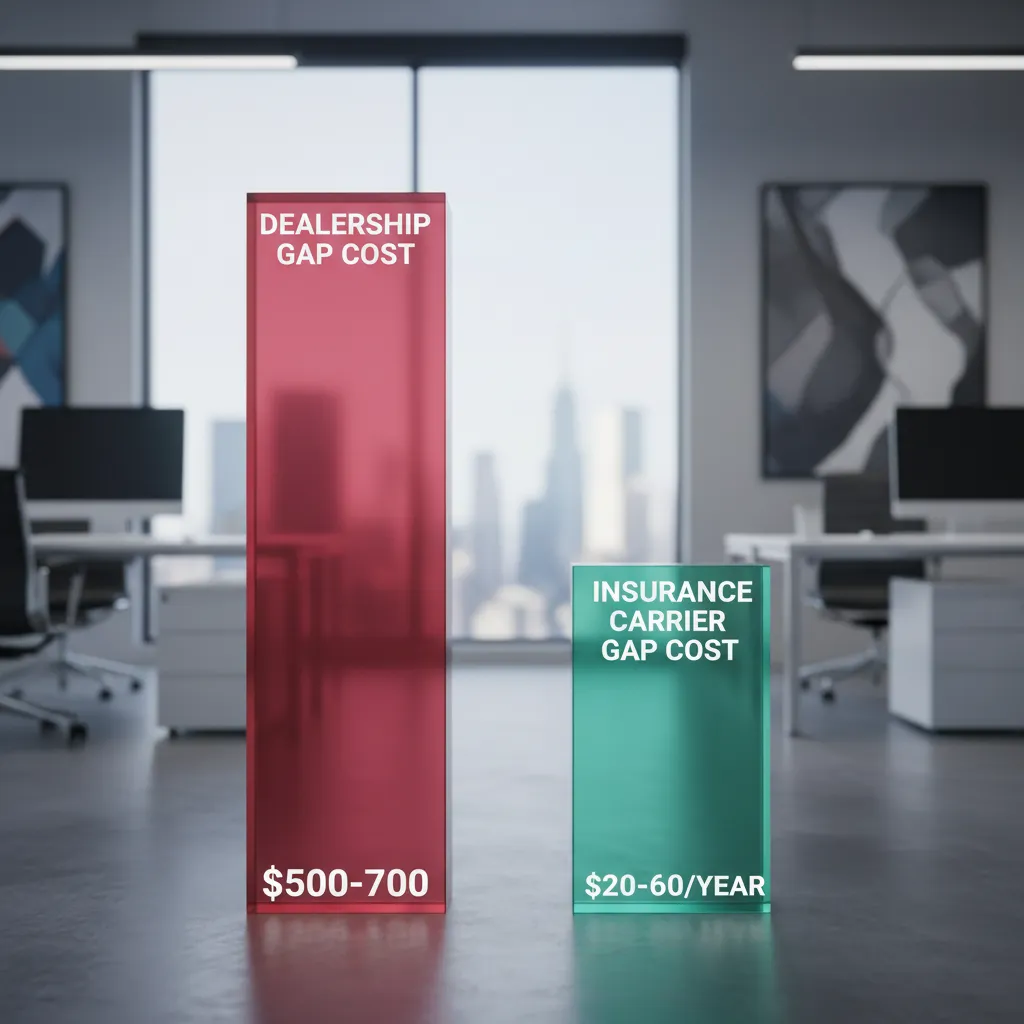
This is where most consumers lose money. You can buy Gap insurance from two main sources, and the price difference is staggering.
1. The Dealership (The “Rip-Off” Zone)
When you are in the finance office, the dealer will offer Gap insurance for a flat fee, typically between $500 and $700. They will often roll this into your loan. This means you are paying interest on your insurance policy! Over a 6-year loan, that $700 policy could cost you over $900.
2. Your Auto Insurance Carrier (The Smart Choice)
Most major insurers (Progressive, Geico, State Farm, etc.) offer Gap insurance (sometimes called “Loan/Lease Payoff”) as an add-on endorsement. The cost? Usually $20 to $60 per year. You pay it monthly with your premium, and you can cancel it the moment you are no longer underwater on the loan.
Pro Tip: Adding this coverage is incredibly simple. In the age of digital insurance management, it is as easy as handling a Bike Insurance Renewal Online. You log into your portal, check a box, and you are covered. Do not let the dealer pressure you into an overpriced contract.
The Claim Process: How Gap Saves You
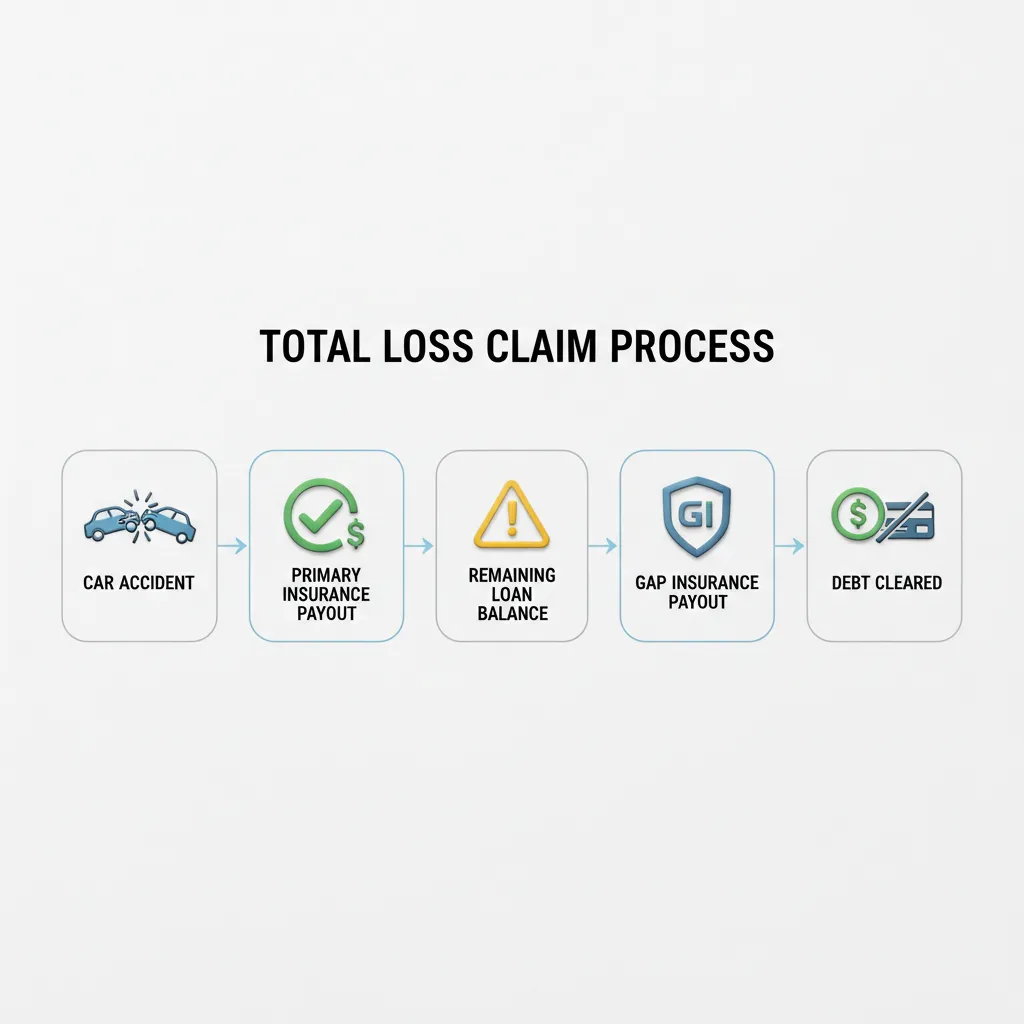
Understanding the Car Insurance Claim Process is vital to seeing the value of Gap coverage. Here is how a total loss scenario plays out with and without Gap:
Without Gap Insurance:
- Accident: Your car is totaled.
- Valuation: Adjuster determines ACV is $15,000.
- Payout: Insurer pays $15,000 (minus deductible) to your lender.
- The Shock: You still owe the lender $20,000.
- The Bill: The lender demands the remaining $5,000 immediately. You have no car and a $5,000 bill.
With Gap Insurance:
- Accident: Your car is totaled.
- Valuation: Adjuster determines ACV is $15,000.
- Primary Payout: Insurer pays $15,000 to lender.
- Gap Claim: The Gap policy kicks in and pays the remaining $5,000.
- Resolution: Loan balance is $0. You are free to finance a new car without carrying over old debt.
Conclusion: The Final Verdict
Is Gap insurance worth it for used cars? Yes, but only if the math says so.
In 2025, the “used cars don’t depreciate” myth is dead. With 39% of borrowers underwater, the risk is real. If you have a high-interest loan, a long term, or a small down payment, Gap insurance is the cheapest financial peace of mind you can buy—provided you buy it from your insurance carrier, not the dealership.
Your Action Plan:
- Check Your LTV: Compare your loan payoff amount to your car’s value on KBB or Edmunds.
- Call Your Agent: Ask if “Loan/Lease Payoff” can be added to your current policy.
- Skip the Dealer Add-on: Save that $500-$700 and avoid paying interest on insurance.
- Monitor Yearly: Once your loan balance is lower than the car’s value, cancel the Gap coverage.
Frequently Asked Questions (FAQ)
Is Gap insurance worth it if I bought a used car?
Yes, if you financed the car with less than 20% down or have a loan term longer than 60 months. Used cars are depreciating at roughly 18% annually in 2025, increasing the risk of negative equity.
Can I get Gap insurance after I bought the car?
Yes. While dealerships sell it at the point of sale, most auto insurance carriers allow you to add Gap coverage (often called Loan/Lease Payoff) to your policy at any time, provided you are the original loan holder.
How much does Gap insurance cost for a used car?
If purchased through your auto insurer, it typically costs between $20 and $60 per year. If purchased through a dealership, it is often a flat fee of $500 to $700.
Does Gap insurance cover engine failure?
No. Gap insurance only covers the financial difference between your loan balance and the car’s value in the event of a total loss (accident or theft). It does not cover mechanical repairs or maintenance.
When should I cancel my Gap insurance?
You should cancel Gap insurance once your loan balance is lower than the actual cash value of your car. Check your loan balance against Kelley Blue Book values annually to determine when you have positive equity.