

Bank of Japan Increases Policy Rate to 0.75%: Implications for US Capital Markets and Global Liquidity
1. Background and Regulatory Context
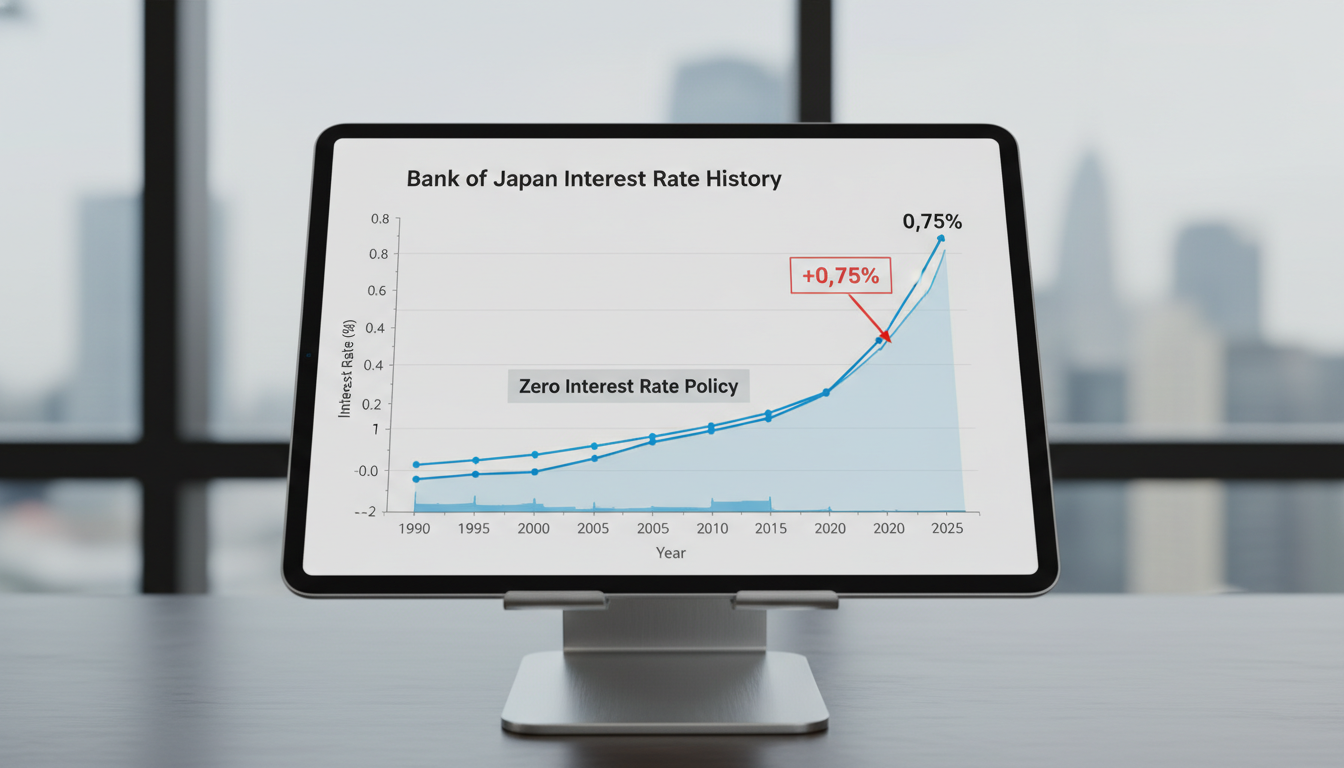
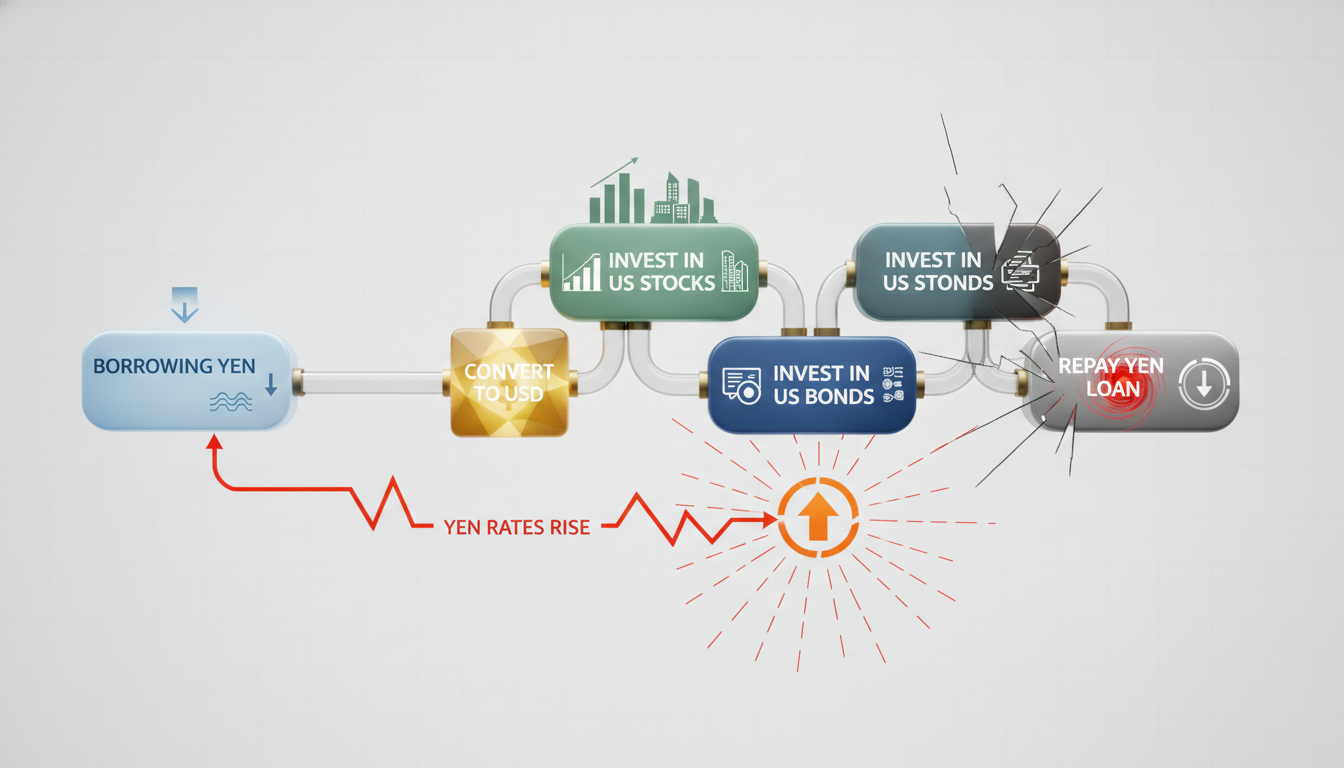
For over three decades, the Bank of Japan maintained a policy of near-zero or negative interest rates to fight deflation, effectively making the Japanese Yen (JPY) a primary funding currency for global investors. This dynamic allowed US-based hedge funds and institutional investors to borrow cheaply in Yen to fund higher-yielding assets in the United States, such as equities and Treasury bonds—a strategy known as the “carry trade” [1.19].
The decision to hike rates to 0.75% in December 2025 was driven by Japan’s core inflation consistently exceeding the 2% target, reaching 3.0% in November 2025 [1.20]. While the hike was widely anticipated, its execution signals a structural normalization of Japanese monetary policy.
US Regulatory Landscape: This shift is of critical interest to US regulatory bodies. The Securities and Exchange Commission (SEC) and the Commodity Futures Trading Commission (CFTC) closely monitor such macro-events for systemic risks, particularly regarding leverage in US equity markets funded by foreign currency. Additionally, the US Treasury Department monitors these developments due to Japan’s status as the largest foreign holder of US government debt, where a shift in yield differentials could impact demand for US Treasuries [1.14].
2. Analysis: Impact on US Markets
The “Yen Carry Trade” and US Equity Volatility
The most immediate concern for the New York Stock Exchange (NYSE) and Nasdaq is the liquidity contraction associated with the carry trade unwind. As borrowing costs in Japan rise (0.75% base rate plus spreads), the profit margin for borrowing Yen to buy US tech stocks or high-yield bonds compresses.
Historically, rapid unwinding of these trades leads to forced selling of US assets. However, market reaction in late December 2025 suggested a “buy the rumor, sell the news” phenomenon. Despite the hike, the Yen initially weakened against the US Dollar (reaching ~157 USD/JPY), as the 0.75% rate was already priced in and remains significantly lower than the US Federal Reserve’s target rate [1.11]. This muted immediate reaction has temporarily spared US equities from a liquidity shock, though the Financial Industry Regulatory Authority (FINRA) remains vigilant regarding margin debt levels linked to foreign currency arbitrage.
US Treasury Yields and Debt Markets
Japan holds over $1 trillion in US Treasury securities. As Japanese domestic yields rise (with 10-year JGB yields climbing toward 2%), Japanese institutional investors—such as life insurers regulated by Japan’s FSA but operating globally—may repatriate funds, selling US Treasuries to buy domestic Japanese bonds [1.13].
For the US economy, a sell-off in Treasuries by Japanese investors would drive US yields higher, increasing borrowing costs for the US government and US mortgage holders. However, with US inflation cooling to 2.7% (November 2025) and the Federal Reserve signaling easing policies for 2026, the spread between US and Japanese rates is narrowing from both ends, potentially mitigating a violent sell-off [1.7].
Corporate Earnings and FX Exposure
For US multinationals (e.g., Apple, Caterpillar, Boeing), the USD/JPY exchange rate is a critical profitability lever. A weaker Yen (as seen post-hike, trading near 157) makes US exports more expensive in Japan but increases the repatriated value of profits earned by US subsidiaries in Japan. Conversely, a strengthening Yen would hurt US subsidiaries’ translated earnings but make US exports more competitive. US CFOs must now navigate higher hedging costs as interest rate differentials shift [1.20].
3. Statistical Data: US vs. Japan (December 2025)
The following table contrasts key economic indicators between the United States and Japan following the December 19, 2025 rate decision.
| Metric | United States (Dec 2025) | Japan (Dec 2025) | Implication for US Investors |
|---|---|---|---|
| Central Bank Policy Rate | ~4.00% – 4.25% (Est.)* | 0.75% [1.2] | Narrowing spread reduces carry trade profitability. |
| Inflation Rate (CPI YoY) | 2.7% [1.7] | 3.0% [1.20] | Japan now has higher inflation momentum than the US. |
| 10-Year Bond Yield | ~3.8% (Trend: Easing) | ~1.98% [1.13] | Japanese bonds becoming competitive alternatives to Treasuries. |
| Currency Trend | USD Strengthening | JPY Weakening (Post-Hike) | Continued strength of USD benefits US importers but hurts exporters. |
*Note: US Fed Rate estimated based on “easing policy” context and CPI data [1.7].
4. FAQ: Technical Clarifications for US Audience
Q: Why did the Yen weaken if the BoJ raised rates? Usually, higher rates mean a stronger currency.
A: This is a classic “buy the rumor, sell the news” event. Markets had aggressively priced in the hike weeks in advance. When the hike finally occurred on December 19, 2025, traders closed their speculative “long Yen” positions to take profits, causing the Yen to fall temporarily [1.11].
Q: How does this affect my US 401(k) or IRA?
A: Indirectly. If the “carry trade” unwinds significantly in the future, it could cause a short-term drop in the S&P 500 as liquidity is withdrawn. Additionally, if Japanese investors sell US Treasuries, US bond yields could rise, potentially lowering the value of bond funds in your portfolio.
Q: Does this impact US mortgage rates?
A: Potentially. US mortgage rates are closely tied to the 10-Year Treasury yield. If Japanese selling pressure drives Treasury yields up, US mortgage rates could see upward pressure, countering the Federal Reserve’s efforts to lower them [1.14].
5. Conclusion
The Bank of Japan’s rate hike to 0.75% represents a watershed moment in global finance, signaling the definitive end of the “cheap money” era that originated in Tokyo. For the United States, the immediate market disruption has been contained, but the structural risks remain. As the interest rate gap between the Federal Reserve and the BoJ narrows throughout 2026, US investors should anticipate higher volatility in currency markets and potential headwinds for US Treasury auctions.
US financial institutions and corporate treasurers must recalibrate their risk models to account for a Japanese economy that is no longer a passive source of global liquidity, but an active competitor for capital.